

TFT Glass-Based Micro LED Display — Non-transparent
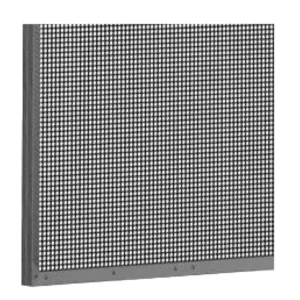
Conventional fine-pitch LED walls are built from PCB cabinets bolted together, which is why you can usually see faint seams and brightness steps between modules when you stand close. A TFT glass-based Micro LED display replaces the PCB with a semiconductor-grade TFT glass backplane, the same substrate technology used in high-end LCD manufacturing. The result is a genuinely seamless, ultra-flat, ultra-thin display surface with true black levels and no module grid visible even at close range.
Key Specifications
| Pixel pitch | P0.4 / P0.6 / P0.9 / P1.2 / P1.5 |
|---|---|
| Substrate | TFT glass backplane (not PCB) |
| Module depth | Under 10mm |
| Seam tolerance | Approx. 20µm module-to-module gap |
| Contrast ratio | >20,000:1 |
| Brightness | 600 – 1,500 nits, calibrated |
| Colour gamut | >110% DCI-P3 |
| Refresh rate | 3,840 Hz / 7,680 Hz option |
| Grey scale | 16-bit |
| Lifespan | 100,000 hours |
| Warranty | 3 years |
What TFT Glass Changes
- Flatness. Glass is manufactured flat to optical tolerance. PCB warps. On a large wall, that difference is the reason one surface looks like a single display and the other looks like a grid of panels.
- Seam invisibility. The module-to-module gap is measured in microns rather than fractions of a millimetre, so the wall reads as continuous at close viewing distance.
- Thermal stability. Glass has a lower and more uniform coefficient of thermal expansion than FR4 PCB, so colour and geometry stay stable as the wall warms up over a long day.
- Depth. Under 10mm of module depth means the finished wall can be recessed flush into a plasterboard reveal with no visible frame.
- Black level. The glass surface treatment and micro-scale LED die produce a deeper, less reflective black than conventional SMD packages, which is what makes cinema and studio content look right.
Best Applications
Executive briefing centres and boardrooms, broadcast and virtual production studios, luxury retail feature walls, automotive showrooms, control rooms, high-end residential cinema, and museum galleries — anywhere the audience gets closer than three metres and the seam of a conventional LED wall would be visible.
How It Compares
Against LCD video walls, Micro LED removes the bezel entirely — there is no black line between tiles at all. Against conventional fine-pitch LED, it removes the module grid, improves flatness, halves the depth, and delivers a noticeably deeper black. Against projection, it works in full ambient light with no shadowing and no lamp maintenance. The trade-off is cost per square metre, which is why Micro LED is specified where the audience is close and the brand impression matters more than the budget line.
Engineering and Installation
Every wall is engineered to the room. We supply a layout drawing showing module grid, total resolution, power load, data routing and service access. Front-serviceable magnetic modules mean the wall can sit flush against a structural wall with no rear access corridor. Colour calibration is performed module by module before shipment and a calibration file is supplied with the wall.
Request a Quote
Send us the wall width and height, the closest viewing distance, the content source resolution, and the ambient light level in the room. Our engineering team will recommend the pixel pitch, confirm the exact native resolution you will achieve, and return a delivered price.
Reviews
There are no reviews yet.