



/* Hide Site Title element when Logo is present (Astra 4.x renders both by default) */
.ast-site-identity .site-title,
.ast-site-identity .ast-site-title-wrap,
.site-branding .ast-site-title-wrap,
.site-branding .site-title {
display: none !important;
}
.ast-site-identity .site-logo-img {
max-width: 220px !important;
max-height: 56px !important;
}
.site-branding {
display: flex !important;
align-items: center !important;
}
@media (max-width: 768px) {
.ast-site-identity .site-logo-img {
max-width: 160px !important;
max-height: 40px !important;
}
}
9.41″ TFT Glass Micro LED Transparent Display Panel
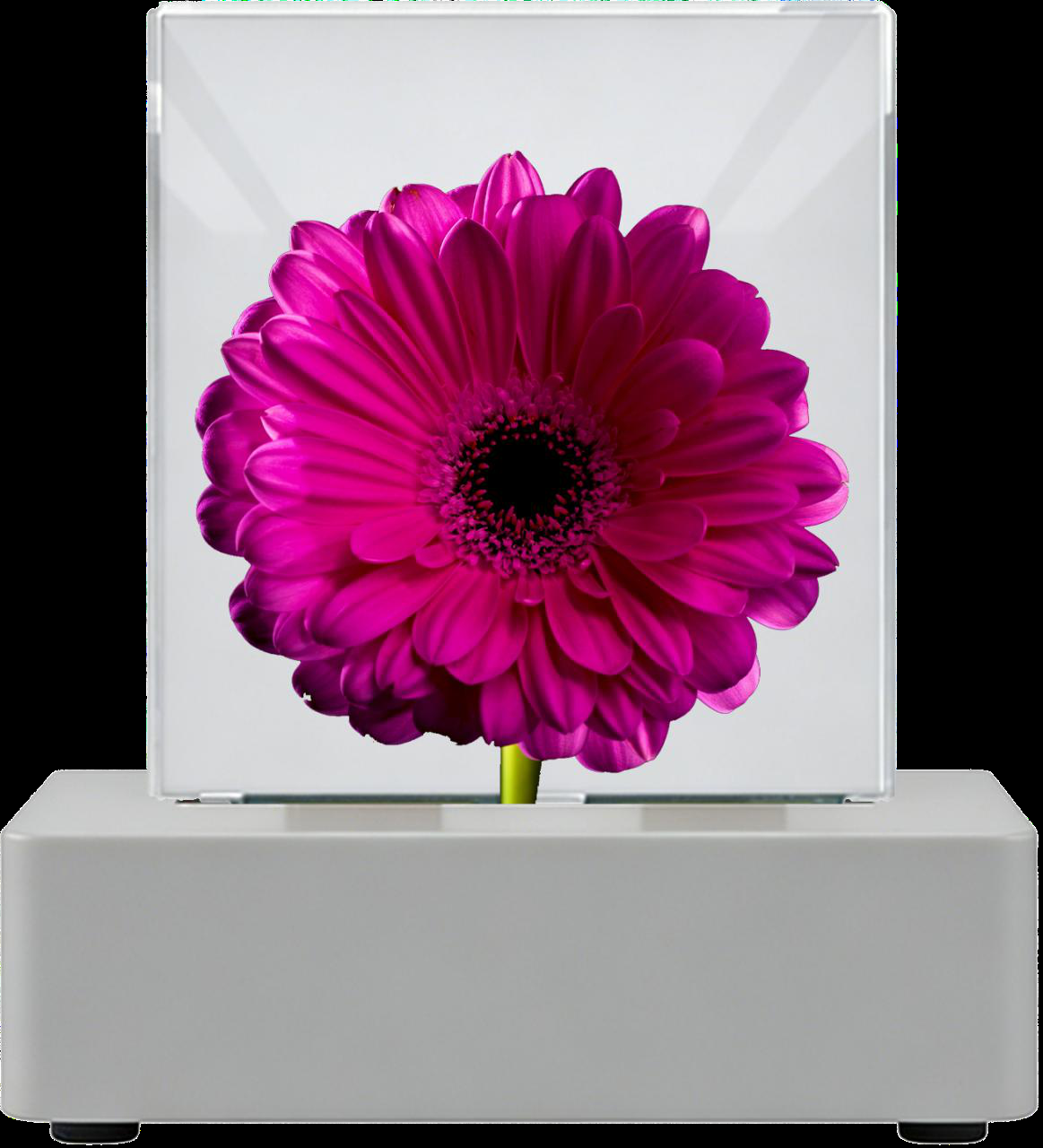
P0.42 mm pixel pitch · 60 PPI · 60% transparency · 3 mm panel thickness · 1,500 nit daylight-readable. The seamless transparent panel for retail windows, museum showcases, exhibition booths and high-end product displays. No bezels. No visible seams. Pure glass that shows both your product and your message.
Why TFT Glass Micro LED — A Different Approach
Most transparent screens on the market are either OLED strips (40% transparent, 400 nit, dim under daylight) or conventional LED mesh (visible LED beads, low fill rate). Our panel is neither. We use an RGB Micro LED chip bonded directly to a TFT glass backplane through mass-transfer lithography — a different category of device with different numbers.
| Parameter | Vistar Micro LED | Conventional OLED | Conventional LED mesh |
|---|---|---|---|
| Brightness (typ.) | 1,500 nit | 400 nit — dim in daylight | 4,000+ nit but blinding |
| Transparency | 60% (typ. 63%) | ~40% | ~50% with visible mesh |
| Pixel density | 60 PPI | ~40 PPI | 2.5–10 PPI (visible beads) |
| Light source | RGB Micro LED on TFT glass | Organic emissive layer | SMD LED beads on PCB |
| Panel thickness | ≤ 3 mm | ~2 mm but fragile | 15–50 mm with frame |
| Color gamut | >95% DCI-P3 | ~100% DCI-P3 | ~75% NTSC |
| Lifetime to half brightness | 100,000 h | ~30,000 h (burn-in) | 50,000 h |
| Operating temperature | −20°C to +60°C | 0°C to +40°C limited | −30°C to +60°C |
| Seamless tiling | Yes — no bezels | Yes | No — visible beads + joints |
The three numbers that matter for retail and exhibition: 1,500 nit daylight readable · 60% light pass-through so your product is still visible · P0.42 sharp at 40 cm viewing distance. That is the pitch we sell.
How the Panel Is Built
Three layers, no optical bonding required. Each pixel is an addressable RGB Micro LED driven by a TFT pixel circuit on a glass substrate, protected by a cover glass. Result: 60% light pass-through with no rainbow, moiré, or hot spots.
- Cover glass — protects the active layer, optical-grade flatness.
- Micro LED layer — RGB chips flip-chip bonded on TFT, <10 µm placement accuracy.
- TFT pixel circuit on glass — semiconductor-grade backplane, 420×384 pixels per panel, 0.42 mm pitch.
Internally we run a 12-inch semiconductor backplane line with proprietary mass-transfer and repair processes. That is why we can hold <0.05% pixel defect rate on production runs, and why Custom PPI (30 / 60 / 150) and custom sizes (12″–55″) are reachable on NRE basis with 8–12 week lead time.
How It Connects to Your System
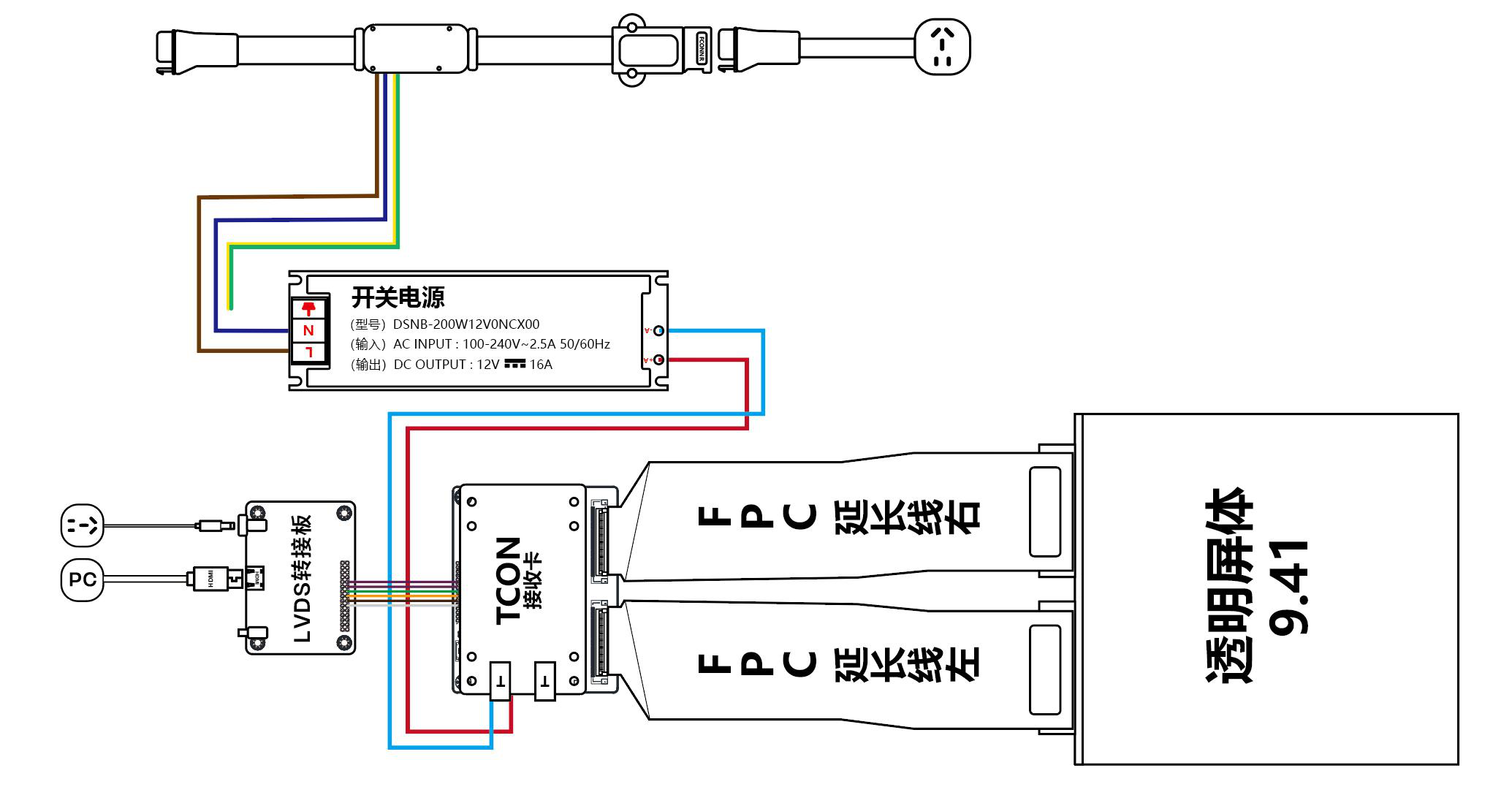
Any off-the-shelf 420×384 @ 60 Hz HDMI or LVDS source drives the panel. For multi-panel walls we add a TCON receiver and stitch the input. Three components, no proprietary cable.
- Video source — media player, PC, or signage controller, HDMI or LVDS output.
- TCON receiver card + LVDS adapter — receives video signal, formats it to the panel resolution, drives through FPC ribbon cables.
- Switching power supply — AC 100–240 V in, DC 12 V / 16 A out, <0.1% ripple.
Where It Fits
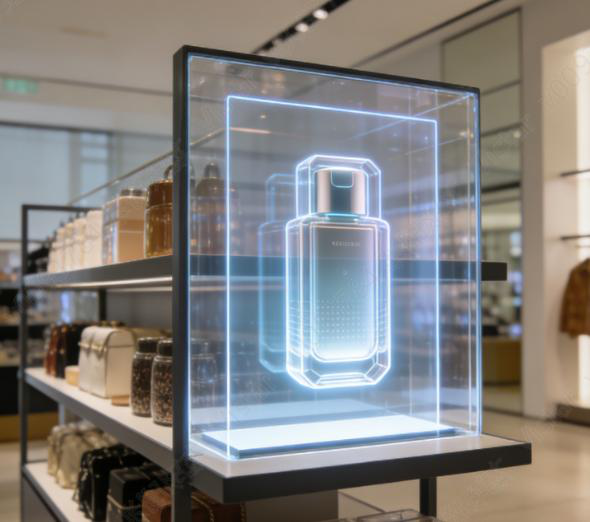
- Retail storefront window. 1,500 nit reads under daylight; 60% transparency keeps the product visible behind the message. Tested in a luxury perfume showcase, see the lead image above.
- Museum & exhibition. 0.42 mm pitch is sharp at 40 cm; high gamut reproduces art correctly. The transparency means the exhibit and the screen are seen at the same time, not instead.
- Conference room signage. Slim 3 mm panel fits into frameless glass partitions. Information floats on the glass without breaking the room.
- Automotive showroom. Bright enough to compete with overhead lighting; no fan, no noise. Tested in a vehicle HMI stack at 9.41″ for OEM evaluation.
- Luxury product showcase. 63% transparency preserves the see-through effect; panel disappears at 2 m distance, only the message remains.
At a Glance
| Panel size | 9.41 inch (diagonal) |
|---|---|
| Resolution | 420 × 384 pixels |
| Pixel pitch | 0.42 mm (P0.42) |
| Pixel density | 60 PPI |
| Active area | 176 × 161 mm |
| Panel dimension | 187 × 162 mm |
| Panel thickness | ≤ 3 mm |
| Brightness | ≥ 1,500 nit (peak 3,000 nit) |
| Transparency | ≥ 60% (typ. 63%) |
| Colour gamut | > 95% DCI-P3 |
| Colour depth | 24 bit (3 × 8) |
| White point | Wx 0.3127 ± 0.03 / Wy 0.3290 ± 0.03 |
| Gamma | 2.2 ± 0.3 (adjustable) |
| Viewing angle | ≥ 170° |
| Reflectance | ≤ 10% |
| Refresh rate | 60 Hz |
| Power consumption | 45 W (full white) |
| LED type | RGB · Flip Chip on TFT glass |
| Input signal | HDMI · LVDS |
| Operating temperature | -20°C to +60°C |
| Storage temperature | -30°C to +60°C |
| Humidity | 10%–90% RH (non-condensing) |
| Protection | IP31 (front) |
How It Tiles
| Layout | Display size | Dimension (W × H) | Notes |
|---|---|---|---|
| 1 × 1 | 9.41" | 187 × 162 mm | Single panel, evaluation unit. |
| 1 × 2 | 14.5" | 187 × 332 mm | Vertical stack. |
| 2 × 2 | 18.8" | 374 × 332 mm | Quarter-square tile. |
| 1 × 2 double-sided | 14.5" | 187 × 332 mm | Both sides show independently. |
| Custom width | any | W unlimited · H step 352.8 mm | Seamless strip — typical for window fronts. |
Custom sizes from 12" up to 55" available on NRE (non-recurring engineering) basis. 8–12 week lead time for custom tooling.
Common Questions
Why is Micro LED on TFT glass different from OLED or SMD LED?
Three structural differences. (1) Light source: RGB Micro LED chips, inorganic, 100,000-hour half-life — not organic emissive layers that burn in. (2) Backplane: TFT glass pixel circuit drives each LED individually, enabling P0.42 with 60 PPI density and full grayscale per pixel. (3) Form factor: no PCB, no SMD carrier, no optical bonding — just glass on glass, 3 mm thin.
Can I use it outdoors?
This is an indoor panel (IP31). For outdoor storefronts we offer a separate IP65 series. Ask for the Outdoor Transparent LED datasheet.
What is the recommended viewing distance?
P0.42 is optimised for 40 cm to 1 m. For longer viewing distances (2 m+), P0.7 or P1.0 will save cost without visible quality loss.
Do you ship a turnkey system or just the panel?
Panel only. Driver board, switching power supply, TCON receiver, FPC cable and mounting frame are typically sourced separately or supplied by our system integration partners. We can recommend partners in your region, or supply the wiring kit for an integrator to assemble.
What content does it accept?
Any 420×384 @ 60 Hz HDMI or LVDS signal. For higher resolution across multiple panels, a TCON receiver stitches the input. Standard video players, BrightSign, IAdea, or any signage box works.
How long does it last?
100,000 hours to half-brightness (typical for commercial Micro LED). 3-year warranty against manufacturing defects. No burn-in, unlike OLED, because each LED chip is inorganic and individually addressable.
What is the lead time?
4–6 weeks for standard 9.41" panels. 8–12 weeks for custom PPI or custom sizes. We hold 200 units of standard 9.41" in our Shenzhen warehouse for evaluation orders.
What is the minimum order?
1 unit for evaluation and integration testing. Volume pricing starts at 10 units. Project pricing for 50+ units.
What certifications do you have?
CE · FCC · RoHS · IP31 (front face). Full reliability test report (high-temp, low-temp, thermal-shock, humidity, salt-fog, vibration, ESD) is available on request.
Can I get a sample or demo unit?
Yes. We ship demo units to qualified integrators. Contact sales with your application and we will arrange a 14-day evaluation.
Indicative Pricing
| Quantity | Price band (USD, FOB Shenzhen) | Lead time |
|---|---|---|
| 1 unit (evaluation) | Contact sales | 1–2 weeks (stock) |
| 10–49 units | Tiered volume discount | 4–6 weeks |
| 50–199 units | Project pricing | 6–8 weeks |
| 200+ units | Frame agreement pricing | 8–12 weeks |
Custom PPI / custom size orders carry an NRE fee (refundable against 1,000+ unit orders).
Get a Quote
Tell us three things — your engineer will reply within 24 hours:
- What are you displaying? (retail window, museum exhibit, conference signage, automotive showcase, other)
- What size and how many panels?
- Your email (or WhatsApp for faster reply)
Or email sales@vistardisplay.net directly. Engineer replies within one working day.
Document version: V1.1 · Issued 2026-08-01 · Subject to change without notice · All values typical unless otherwise stated. Manufacturer: Vistar Display · vistardisplay.net

Reviews
There are no reviews yet.